Cantonese on Windows
How to write, type, listen, and dictate Cantonese on Windows Computers.
This guide was written to work for Windows 11, Windows 10, and Windows 7.
* Windows can technically read out Cantonese text (Text-to-Speech). However, a 3rd party app is required to do this easily.
** Windows 11 supports Cantonese Dictation (Speech-to-Text). However, Windows 10 does not support Cantonese dictation.
Write
To input Cantonese Chinese by Handwriting:
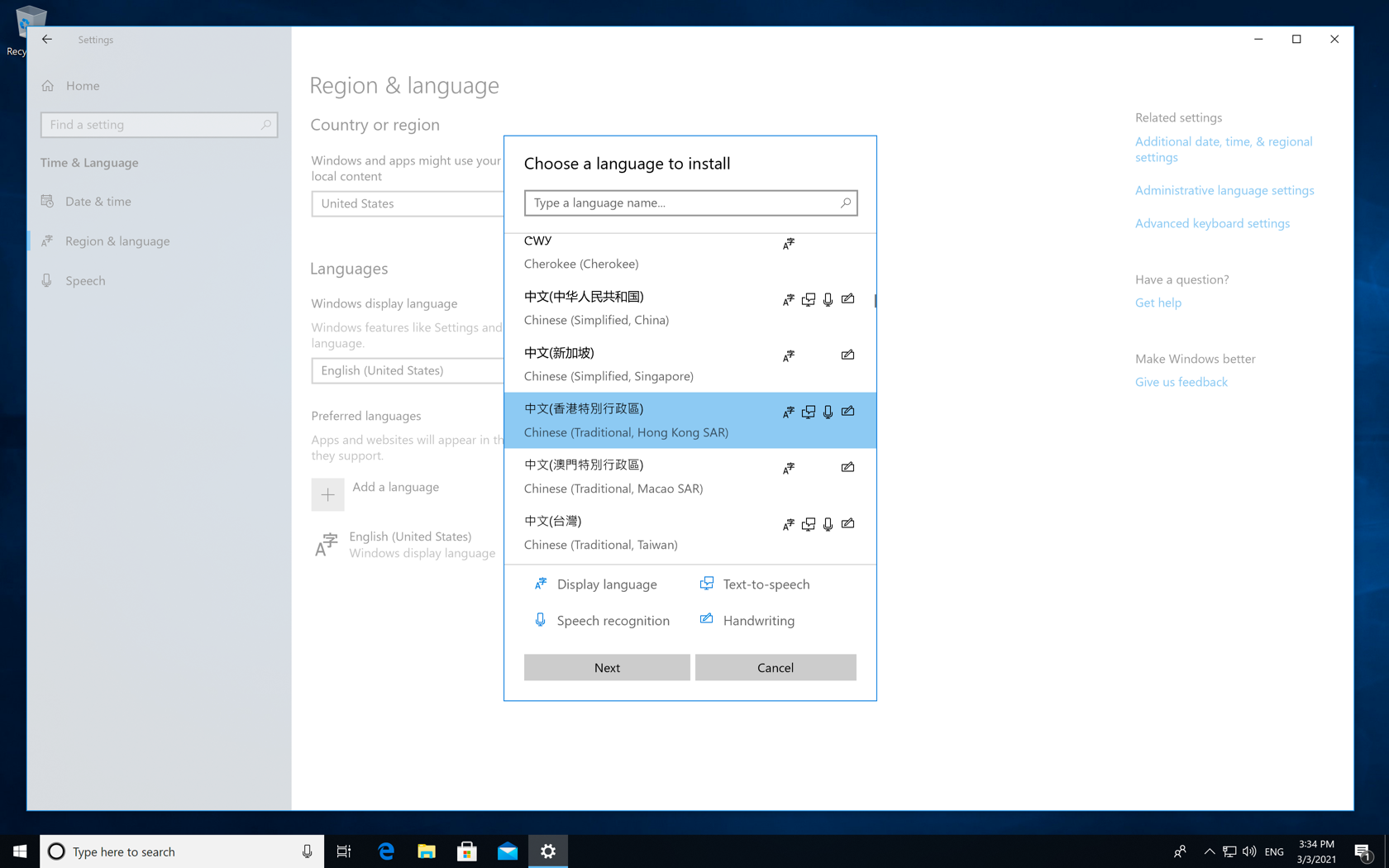
- Open Settings > Time & Language > Language
- Click Add a preffered language
- Select Chinese (Traditional, Hong Kong SAR). Wait for the download to complete.
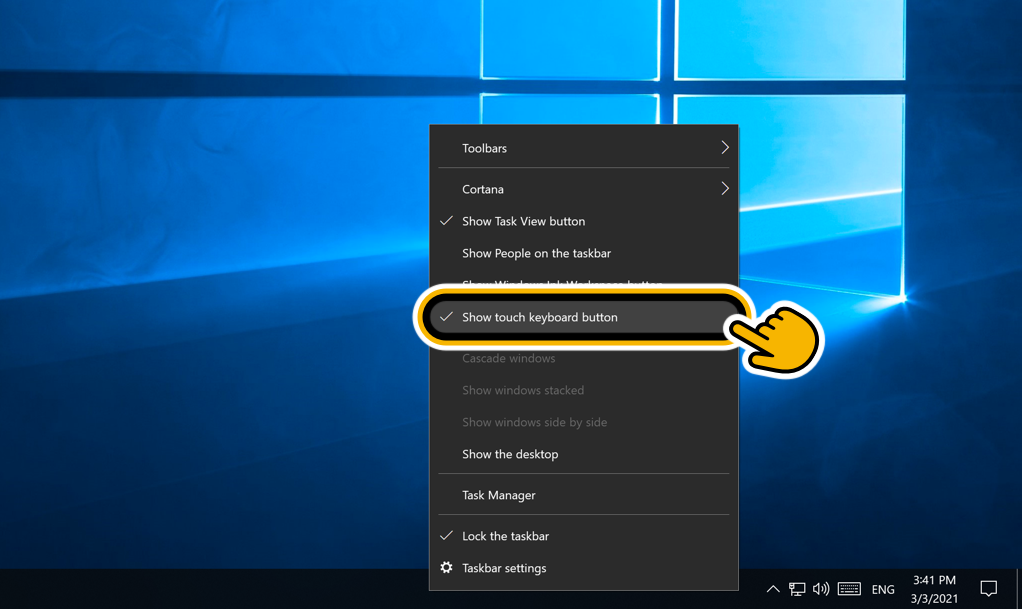
- Right-Click the Taskbar, and make sure that "Show touch keyboard button" is ticked.
- Tap on the ‘Touch Keyboard’ button to open it. Change the language to Chinese (bottom-right), and change the mode to Handwriting (this may be on the top-left or bottom-right).
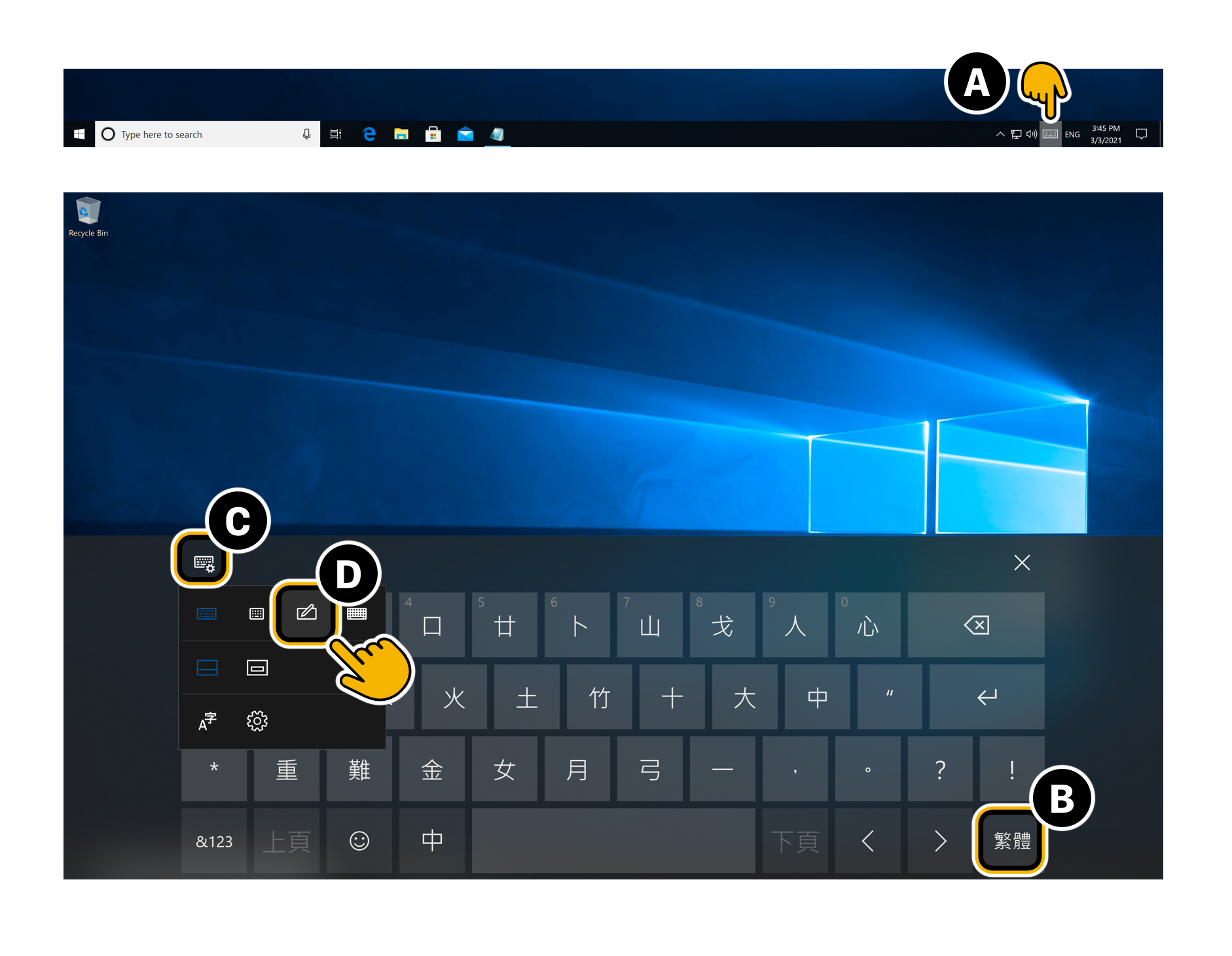
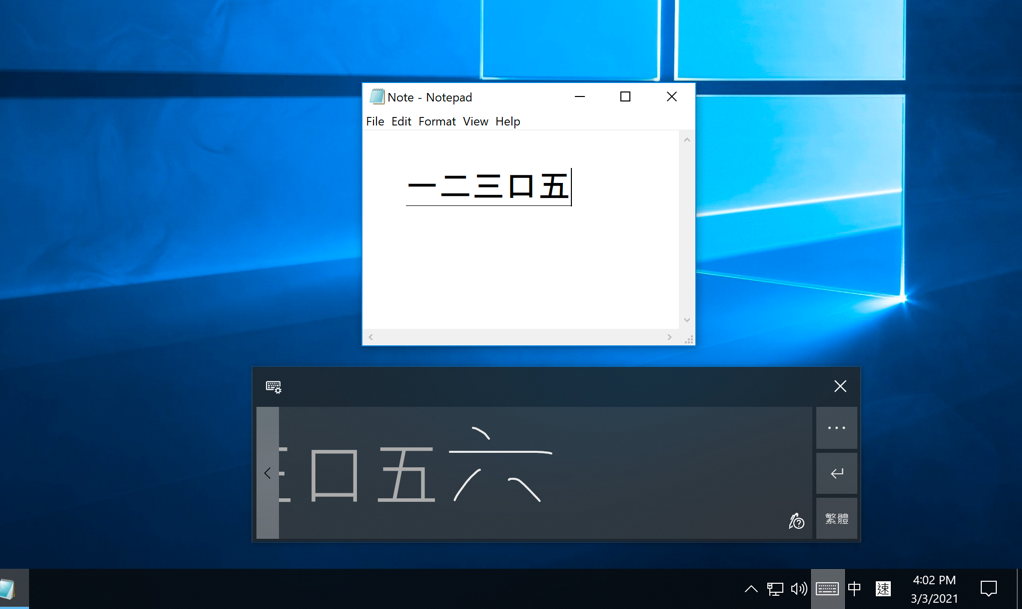
Now you can tap on the 'Touch Keyboard' button at anytime, and start handwriting chinese characters.
Type
Windows is the only major OS to not officially support typing Cantonese. Meanwhile MacOS, iOS, and Android support typing Cantonese by default.
Fortunately, it is still possible to type Cantonese on Windows with Third Party tools – whether you prefer Jyutping or Yale.
Jyutping is more modern and its spellings are based on the International Phonetic Alphabet. Yale is more intuitive for English speakers and has more traditional resources.
Install a Cantonese Jyutping Keyboard on Windows
TypeDuck provides an easy way to install Jyutping on Windows.
Install a Cantonese Yale Keyboard on Windows
Cantonese Phonetic IME (CPIME) provides instructions on how to install CPIME on Windows. CPIME supports typing Cantonese in Yale, as well as Jyutping, and Sidney Lau.
Listen (TTS)
Windows can read out Cantonese Chinese text (Text to Speech). However, to do this easily, a 3rd party program is required.
To get started:
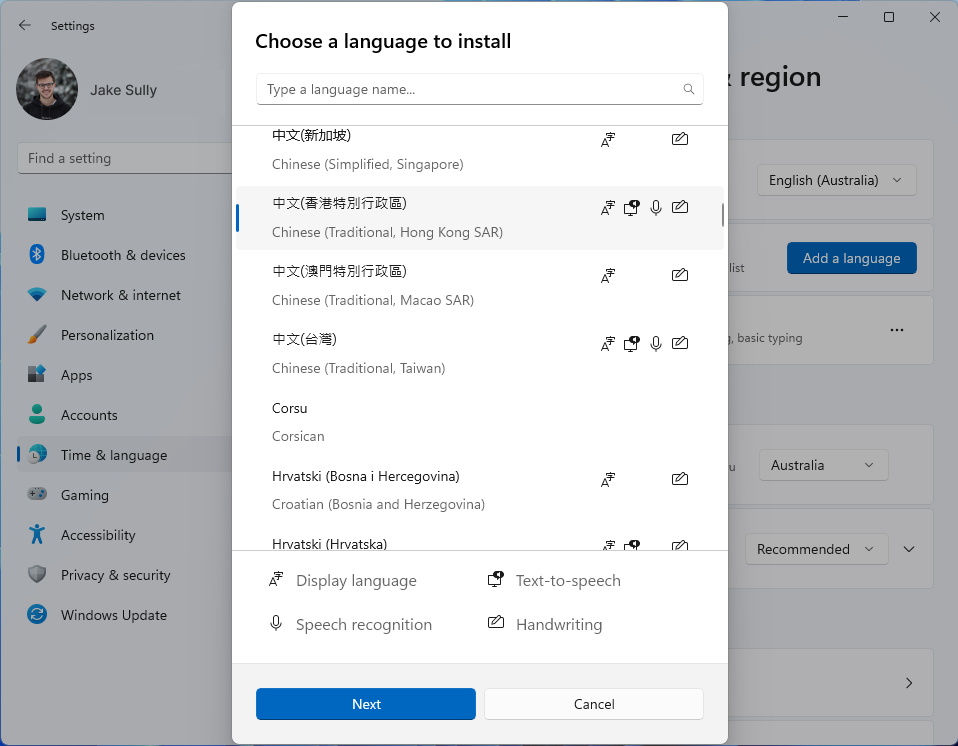
- Check to make sure you have the Chinese (Traditional, Hong Kong SAR) language pack installed at: Settings > Time & Language > Add a language > Chinese (Traditional, Hong Kong SAR)
- If you are on Windows 10 or older (skip this if you are on Windows 11 or newer):
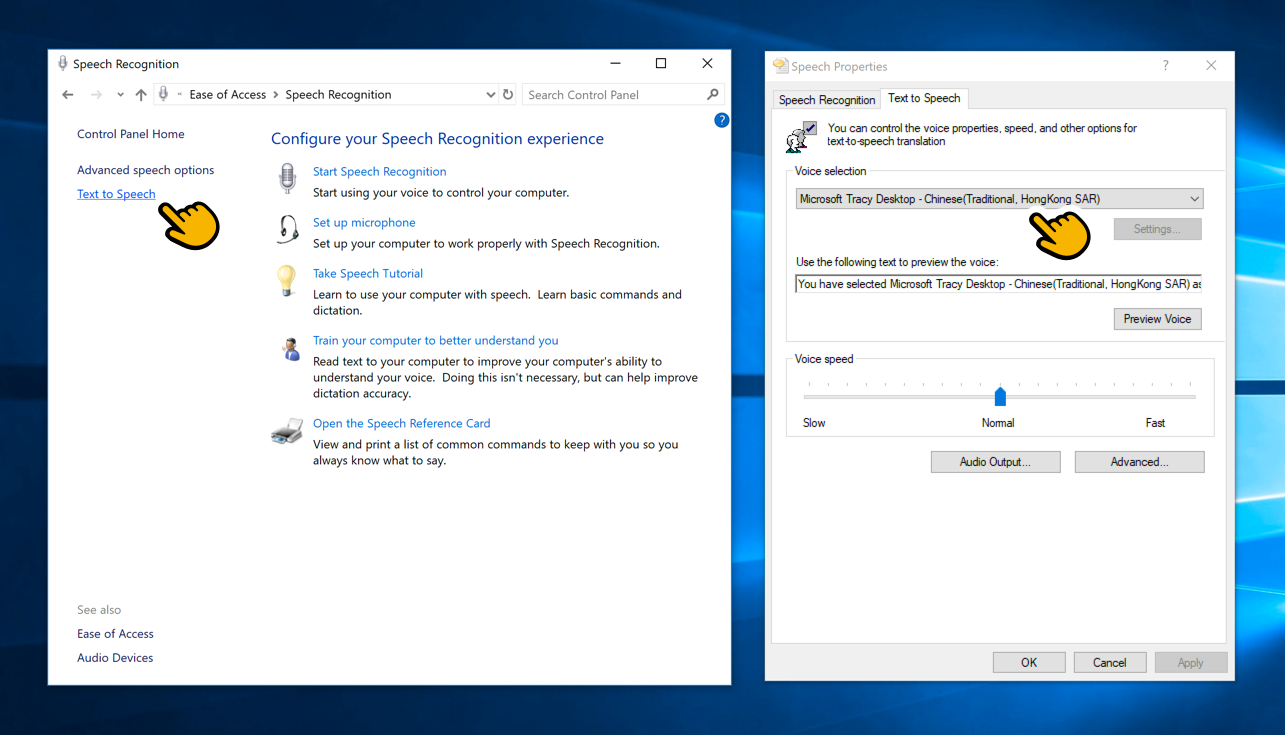
- Go to CONTROL PANEL > Ease of Access > Speech Recognition > Text to Speech.
- Set the Text-to-Speech Voice to [ Microsoft Tracy Desktop - Chinese (Traditional, HongKong SAR) ]
- Download & Install Simple TTS Reader
-
Open the program. In the list of voices, select "Microsoft Tracy Desktop - Chinese (Traditional, HongKong SAR)".
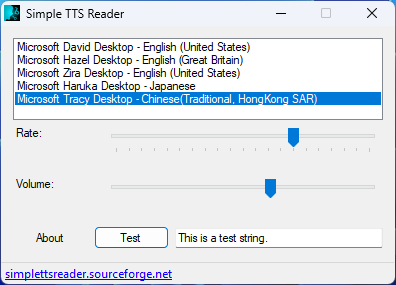 (If you don't see "Microsoft Tracy", try repeating step 2 and restarting your computer.)
-
Now, you can Select Cantonese Text and have it be read out loud by Copying it (Control+C, or, Right-Click > Copy).
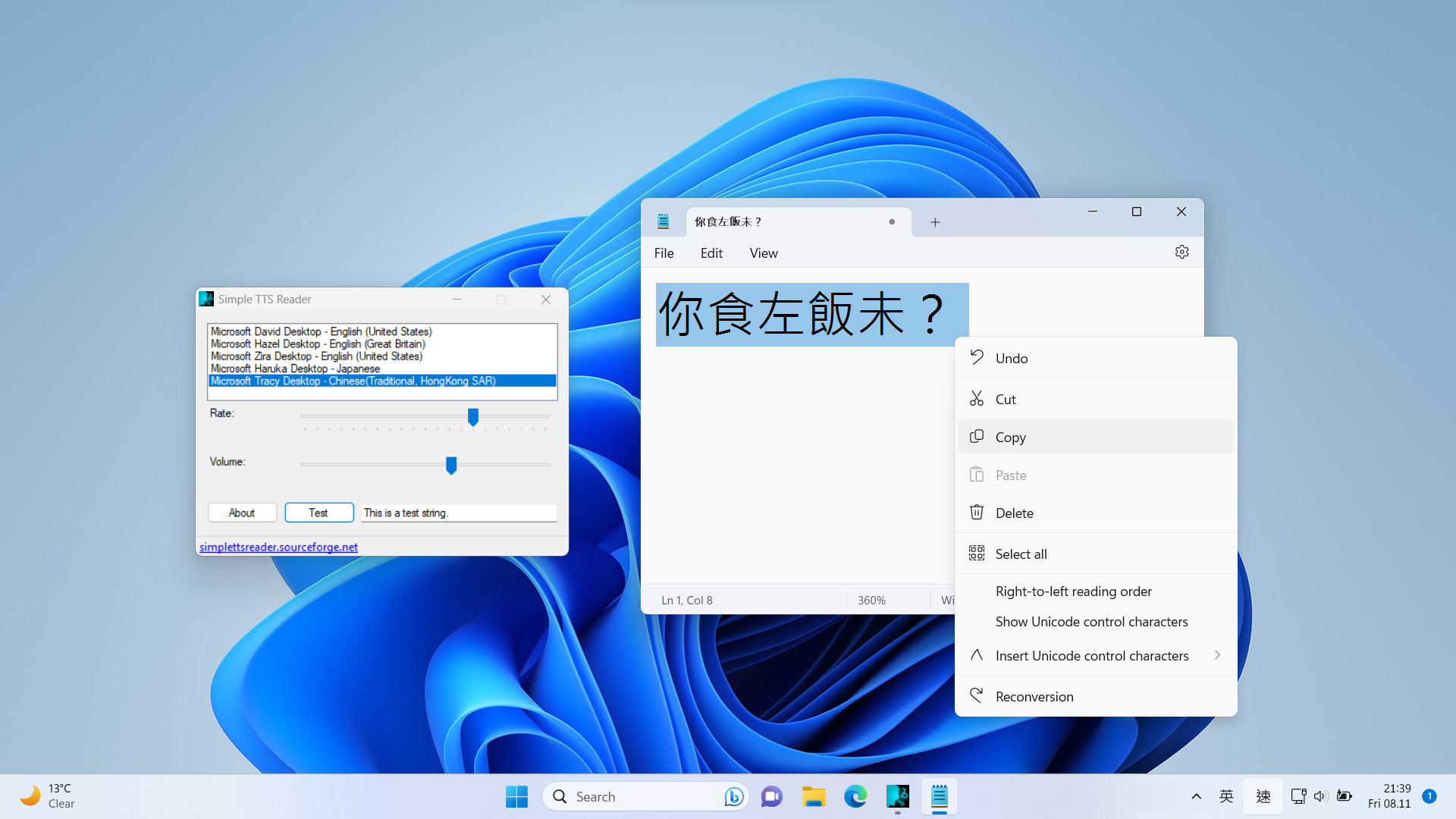
To stop text from being read out every time it's copied, you can close the program or reduce its volume.
(If the program is reading out text, but you can't find it, it might be in the "System Tray". The System Tray is on the Bottom-Right of the screen.)
Dictate
Microsoft added Cantonese dictation (speech recognition, speech-to-text) in Windows 11. (Windows 10 and older do not actually support Cantonese dictation, even though Windows 10 lists it as part of its Cantonese language pack.)
To input Cantonese by dictating it on your Windows PC:
- Make sure the Cantonese Language Pack is installed. To install it:
- Go to Settings > Time & Language > Add a language > Chinese (Traditional, Hong Kong SAR)
Now, to dictate Cantonese:
- At the end of your Taskbar (usually in the bottom-right of your screen), change the “Input Method” to any input that says “Chinese (Traditional, Hong Kong SAR)”.
- Open Notepad
- Activate Voice Typing (Dictation) by pressing the "Window Logo" key and "H" key together.
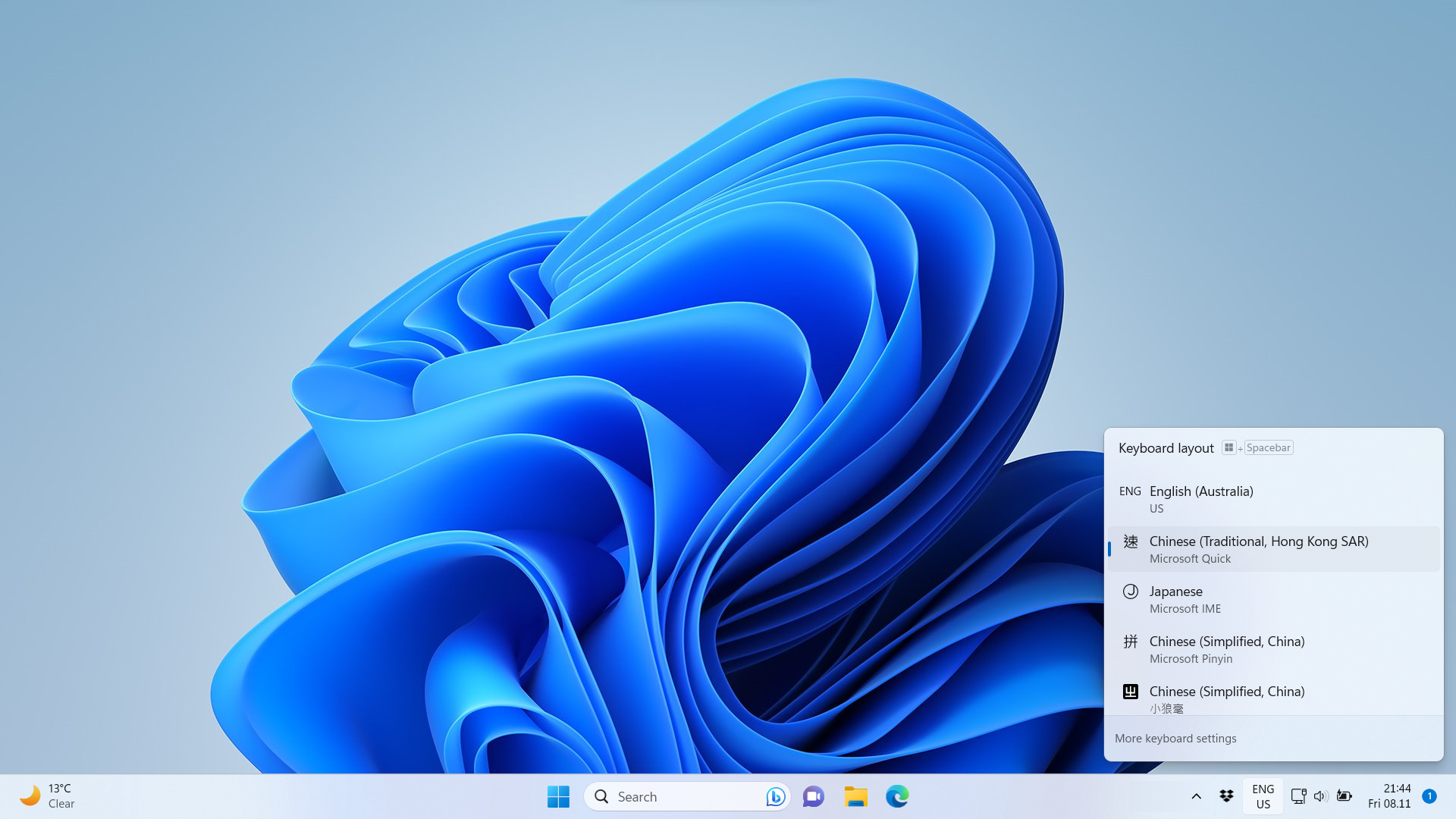
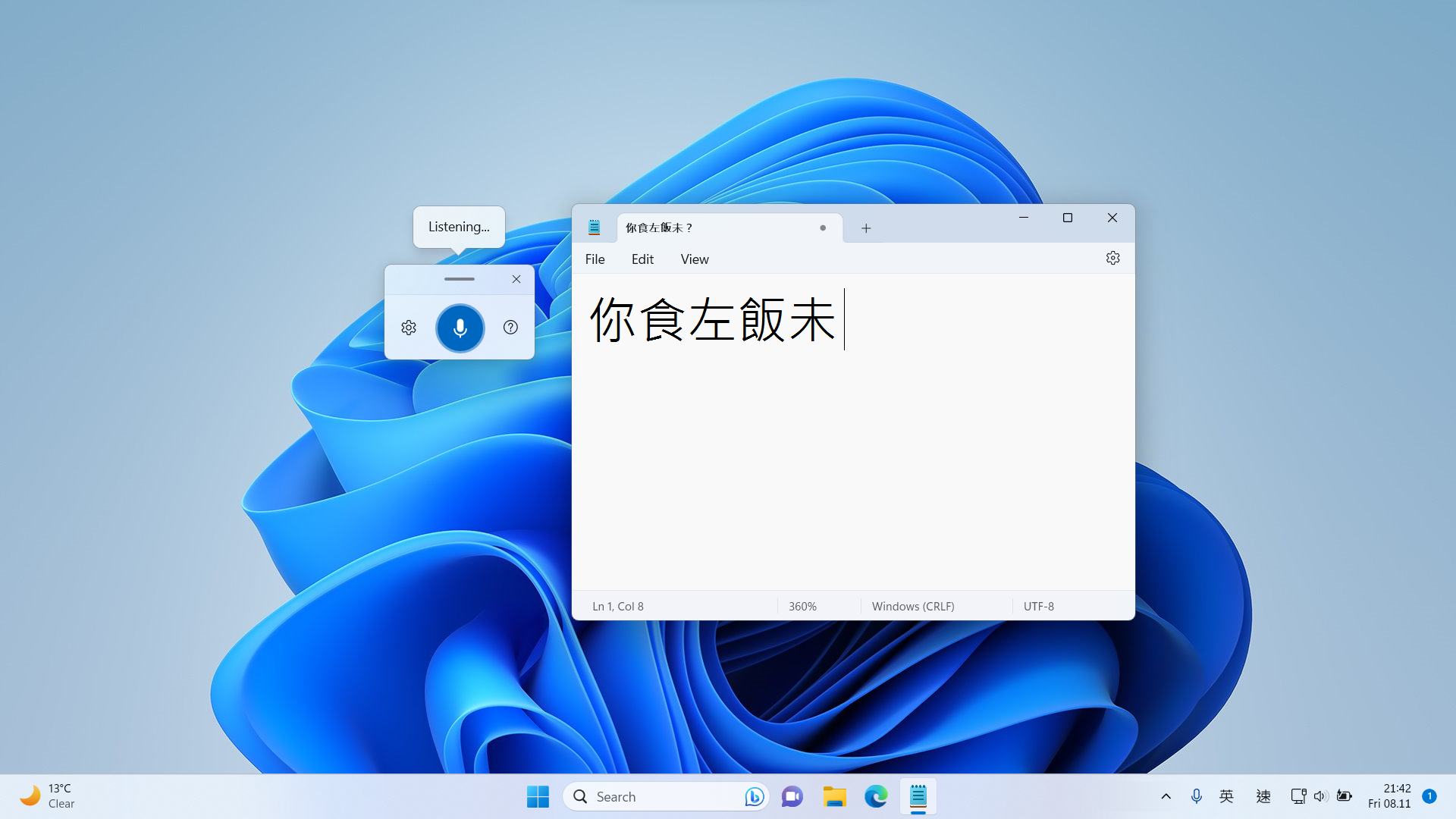
Now instead of typing, you can speak Cantonese Chinese to your Mac and have it write it down for you.
Cortana
Microsoft’s Voice Assistant, Cortana, is being deprecated. It is being replaced by Bing Chat.
Bing Chat does not currently support Cantonese Chinese.
Footnotes
Note: The information here is based on Windows 11 and Windows 10 (version 1909).
Page last updated August 2023.